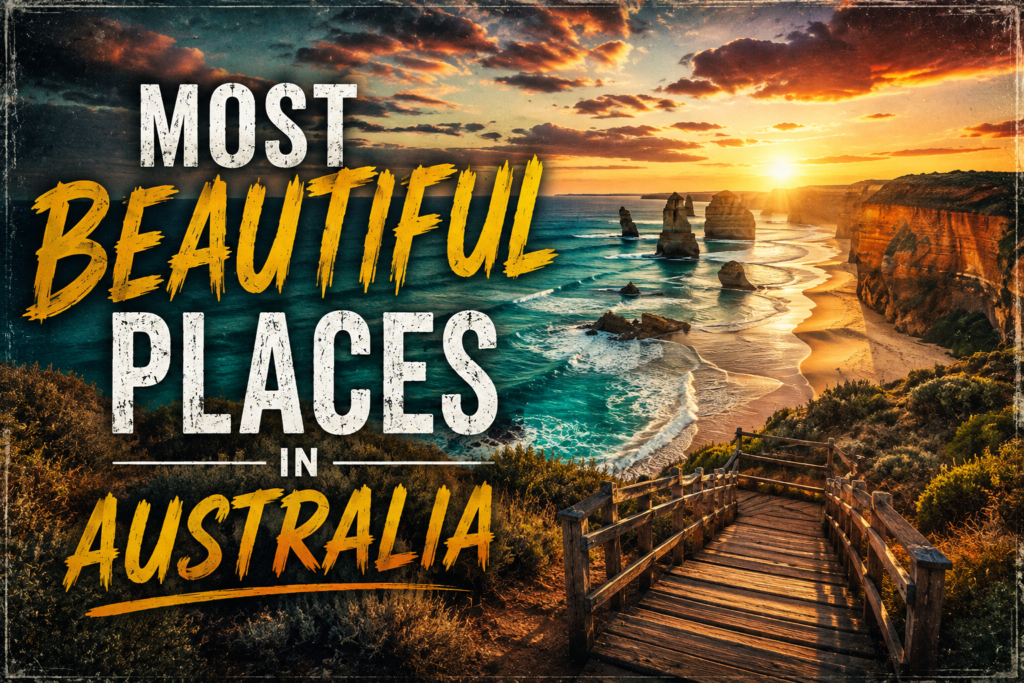
Australia is one of the world’s most attractive travel destinations, offering everything from pristine beaches and colorful coral reefs to dramatic mountains, deserts, and vibrant cities. Whether you’re an adventure seeker, nature lover, photographer, or family traveler, you’ll find countless unforgettable destinations across the country.
Attractive places in Australia showcase incredible natural beauty, unique wildlife, and world-famous landmarks that attract millions of visitors every year. From the iconic Sydney Opera House to the breathtaking Great Barrier Reef and the red landscapes of Uluru, every destination has its own charm. This guide highlights ten of Australia’s most beautiful places to help you plan an unforgettable journey.
Top 10 Most Beautiful Places in Australia
1. Sydney Opera House, New South Wales
The Sydney Opera House is one of Australia’s most recognizable landmarks and a UNESCO World Heritage Site. Located on Sydney Harbour, its unique sail-shaped architecture has become a symbol of the country.
Visitors can enjoy guided tours, live performances, waterfront restaurants, and stunning harbour views. The nearby Sydney Harbour Bridge and Royal Botanic Garden make this area perfect for sightseeing. Sunrise and sunset are the best times to capture spectacular photographs of this iconic attraction.
2. Great Barrier Reef, Queensland
Stretching over 2,300 kilometers, the Great Barrier Reef is the world’s largest coral reef system and one of Australia’s greatest natural wonders. It is home to thousands of marine species, including colorful coral, sea turtles, tropical fish, dolphins, and reef sharks.
Visitors can experience snorkeling, scuba diving, glass-bottom boat tours, and scenic helicopter flights. The crystal-clear waters and incredible underwater biodiversity make this destination a dream for nature lovers and adventure seekers.
3. Whitehaven Beach, Queensland
Located in the Whitsunday Islands, Whitehaven Beach is famous for its incredibly soft white silica sand and crystal-clear turquoise water. Often ranked among the world’s best beaches, it offers breathtaking scenery that looks almost untouched.
Travelers can swim, relax, kayak, or hike to Hill Inlet Lookout for panoramic views of swirling blue and white waters. The peaceful atmosphere makes Whitehaven Beach one of Australia’s most relaxing holiday destinations.
4. Uluru (Ayers Rock), Northern Territory
Standing proudly in the heart of Australia’s Red Centre, Uluru is one of the country’s most sacred and culturally significant landmarks. This massive sandstone monolith changes color throughout the day, creating unforgettable sunrise and sunset views.
Visitors can explore guided cultural tours, walking trails, and nearby Kata Tjuta National Park while learning about the traditions of the Anangu people, the traditional custodians of the land.
5. The Twelve Apostles, Victoria
The Twelve Apostles are towering limestone rock formations rising dramatically from the Southern Ocean along the famous Great Ocean Road. Formed over millions of years by wind and waves, these coastal stacks create one of Australia’s most photographed landscapes.
Visitors can admire the cliffs from viewing platforms, take scenic helicopter flights, or enjoy nearby walking trails. The golden light during sunrise and sunset creates unforgettable photography opportunities.
6. Blue Mountains National Park, New South Wales
Just a short drive from Sydney, Blue Mountains National Park is famous for its dramatic cliffs, eucalyptus forests, waterfalls, and breathtaking valleys. The park gets its name from the blue haze created by eucalyptus oil in the air.
One of its biggest attractions is the Three Sisters rock formation, which offers spectacular views from Echo Point. Visitors can also enjoy scenic hiking trails, cable cars, waterfalls, and wildlife spotting. It’s an excellent destination for both adventure lovers and photographers.
7. Wineglass Bay, Tasmania
Located in Freycinet National Park, Wineglass Bay is one of Australia’s most picturesque beaches. Its perfectly curved shoreline, white sand, and turquoise waters create postcard-worthy scenery.
A short hike to the Wineglass Bay Lookout rewards visitors with breathtaking panoramic views. Those looking for adventure can continue to the beach for swimming, kayaking, or simply relaxing in a peaceful natural setting. The area is also home to native wildlife, including wallabies and sea birds.
8. Kakadu National Park, Northern Territory
Kakadu National Park is Australia’s largest national park and a UNESCO World Heritage Site known for its incredible biodiversity and Aboriginal cultural heritage. The park features wetlands, waterfalls, rivers, ancient rock art, and diverse wildlife.
Visitors can take boat cruises to see crocodiles, hike to stunning waterfalls like Jim Jim Falls, or explore Aboriginal rock art sites that are thousands of years old. Kakadu offers an unforgettable combination of natural beauty and cultural significance.
9. Ningaloo Reef, Western Australia
Often compared to the Great Barrier Reef, Ningaloo Reef offers incredible marine experiences in a less crowded environment. The reef lies close to the shore, making it easy to access for snorkeling and diving.
Visitors can swim alongside whale sharks during the migration season, spot manta rays, turtles, dolphins, and colorful tropical fish. The crystal-clear waters and vibrant coral reefs make Ningaloo one of Australia’s hidden gems for marine adventures.
10. Cradle Mountain, Tasmania
Cradle Mountain is one of Tasmania’s most iconic natural attractions, surrounded by alpine lakes, ancient forests, and rugged mountain peaks. It’s part of the Cradle Mountain–Lake St Clair National Park, a paradise for hikers and nature lovers.
The famous Dove Lake Circuit offers stunning views of the mountain and is suitable for most fitness levels. Visitors may also encounter wombats, echidnas, and Tasmanian devils while exploring the park’s beautiful walking trails.
Best Time to Visit Australia
Australia is a year-round destination, but the best time to visit depends on where you’re traveling.
- September to November (Spring): Pleasant weather, blooming flowers, and ideal for sightseeing.
- December to February (Summer): Perfect for beaches, snorkeling, and coastal holidays.
- March to May (Autumn): Comfortable temperatures with fewer crowds.
- June to August (Winter): Great for exploring the tropical north and enjoying skiing in the Australian Alps.
Spring and autumn are generally the best seasons for comfortable weather across most regions.
Travel Tips for Tourists
Before visiting Australia, keep these helpful tips in mind:
- Plan your itinerary in advance because attractions are spread across large distances.
- Book accommodation and flights early during peak travel seasons.
- Wear sunscreen, sunglasses, and a hat, as the Australian sun can be intense.
- Carry reusable water bottles to stay hydrated.
- Respect wildlife and keep a safe distance from native animals.
- Follow local safety signs at beaches and national parks.
- Purchase travel insurance for peace of mind.
- Check local weather conditions before outdoor activities.
Conclusion
From world-famous landmarks to breathtaking natural wonders, the most beautiful places in Australia offer unforgettable experiences for every type of traveler. Whether you dream of exploring the colorful Great Barrier Reef, watching the sunset over Uluru, relaxing on Whitehaven Beach, or hiking through Cradle Mountain, Australia is filled with destinations that will leave lasting memories.
Start planning your Australian adventure today and discover why this incredible country continues to rank among the world’s top travel destinations.
Frequently Asked Questions
1. What is the most beautiful place in Australia?
Many travelers consider the Great Barrier Reef one of Australia’s most beautiful destinations because of its colorful coral reefs and diverse marine life.
2. Which city in Australia is the most scenic?
Sydney is widely regarded as Australia’s most scenic city thanks to attractions like the Sydney Opera House, Harbour Bridge, and beautiful beaches.
3. What is the best month to visit Australia?
September to November and March to May are considered the best months due to pleasant weather and fewer crowds.
4. Is Australia good for first-time travelers?
Yes. Australia offers excellent infrastructure, friendly locals, world-class attractions, and a wide range of experiences suitable for first-time visitors.
5. How many days are enough to explore Australia?
A trip of 10–14 days allows visitors to experience several major cities and natural attractions, although longer stays provide a more complete experience.